Seasonal Allergies in Florida: What's Behind Your Symptoms
You blow your nose for the tenth time before noon. Your eyes have been itchy since Tuesday. And everyone around you keeps saying the same thing: "must be allergies." They're probably right. But that doesn't tell you much when you're standing in the middle of a Florida spring, wondering why your body is staging a full-scale rebellion.
Why are my allergies so bad right now is one of the most common questions patients bring to our offices, and the honest answer is that it depends on a few things: where you are in the year, what's currently pollinating, and how sensitive your immune system is to those particular triggers. For Floridians, the situation is often more complicated than it is for people in other parts of the country, and the reason comes down to climate.
Florida's warmth
doesn't give pollen a real off-season. Trees, grasses, and weeds can stay active far longer than they do in colder climates, which means seasonal allergies right now might simply be a continuation of the reaction you had three months ago. If you've been trying to push through lingering symptoms that keep cycling back, this guide is for you.
Find Your Allergy Triggers
What Is Causing Your Allergies Right Now?
The short version is that your immune system is overreacting to something in the environment. When you encounter an allergen like pollen, mold spores, or pet dander, your body releases histamine as if it were under attack. That response is what drives sneezing, congestion, itchy eyes, and general misery, which most people recognize as allergy symptoms.
What makes it complicated in Florida is the sheer variety of potential triggers and the length of exposure windows. Unlike northern states that get a real winter break, Florida's mild temperatures allow multiple allergens to be active at any given time. Is it allergy season right now in Florida? Depending on the time of year, the answer is almost always yes, just with different culprits.
What Are the Worst Months for Allergies in Florida?
This question comes up constantly, and there's no clean one-month answer. The worst months for allergies in Florida tend to vary based on which allergen you're most sensitive to. As a general pattern, spring (February through May) tends to hit tree pollen sufferers hardest, while summer keeps grass pollen elevated well into fall. Ragweed takes over in late summer and early fall, and mold tends to flare whenever humidity spikes or a stretch of rainy weather moves through.
In terms of the worst months for allergies overall, February through October covers the most intense period for the majority of Tampa Bay residents. That's a long window, and it's exactly why so many Floridians feel like they're never fully in the clear. You can check what's currently active by visiting our
live Pollen Report, which gives you real-time local counts before you head outside.
How Long Do Seasonal Allergies Last?
How long do allergies last depends almost entirely on what you're allergic to and whether that allergen is still present in the air. If you're reacting to oak tree pollen, your symptoms should ease once oak season wraps up. If you're sensitive to dust mites or mold, those are year-round triggers, and your symptoms won't follow a neat seasonal pattern at all.
Classic seasonal reactions tied to pollen typically last from a few weeks to a couple of months per season. But in Florida, because multiple seasons overlap and some plants pollinate over an extended period, many patients experience near-continuous symptoms from
late winter, all the way through fall. That's not a stubborn cold. That's sustained allergen exposure that needs real attention.
How to Tell the Difference Between a Seasonal Allergy and a Common Cold?
One of the most common reasons people go untreated is that they chalk up their symptoms to a cold and wait it out. Understanding the difference between allergies and a cold can save you weeks of unnecessary suffering.
A cold is caused by a virus. Your immune system fights it off, and within 7 to 10 days, you're generally better. Colds can also involve a low-grade fever, body aches, and a sore throat that worsens over a few days before improving. Allergy symptoms, on the other hand, don't cause a fever, tend to stay fairly stable rather than follow that arc, and often worsen in specific environments, such as outdoors on a breezy day, near freshly cut grass, or in a dusty room.
Another reliable tell: if your symptoms show up at the same time every year and fade once that season passes, you're almost certainly dealing with allergies rather than a recurring virus.
Spring Allergy Symptoms in Florida
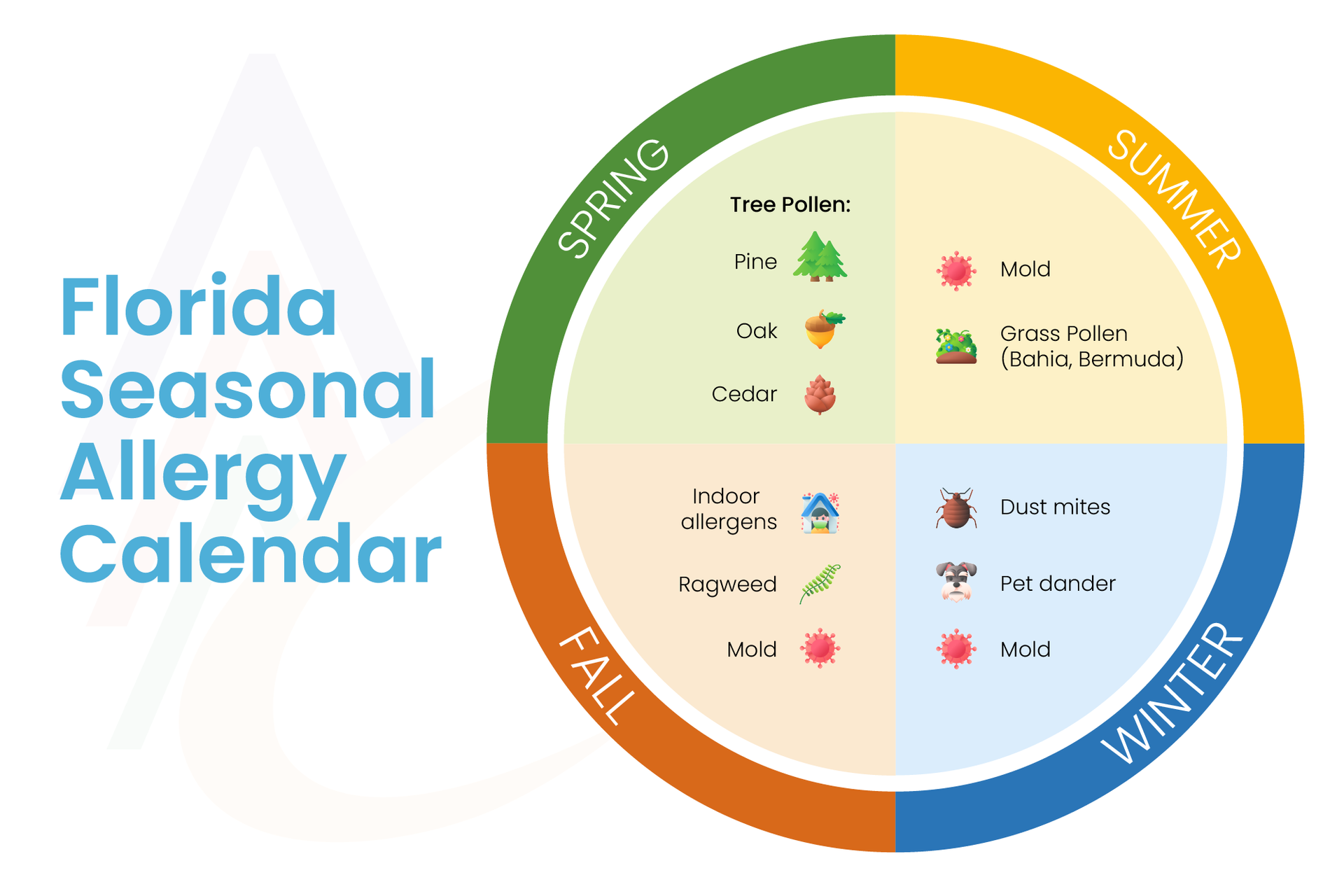
Spring is when the allergy calendar really kicks into gear. Tree pollen is the primary driver from February through April, with oak, cedar, juniper, pine, and elm among the most common culprits in the Tampa Bay area. As trees wind down, grass picks up, extending the spring reaction well into May.
Spring allergy symptoms tend to center on the nose and eyes: sneezing in bursts, a runny or congested nose, itchy and watery eyes, and postnasal drip that can trigger a persistent cough. Fatigue is also common, largely because congestion disrupts sleep. For people with asthma, spring pollen is a well-known trigger for flare-ups, so keeping rescue medication on hand during peak weeks is worth doing. For a closer look at one of the season's biggest offenders, see our post on grass pollen allergy and what every Florida resident should know.

Summer Allergies & Symptoms in Florida
Once spring tree pollen fades, grass takes center stage. Bahia grass, Bermuda grass, and Johnson grass are all heavy producers, and in Florida's warm climate, they stay active throughout much of the summer. Ragweed typically begins to build by August, creating an overlap period when grass and weed pollen are both elevated at the same time.
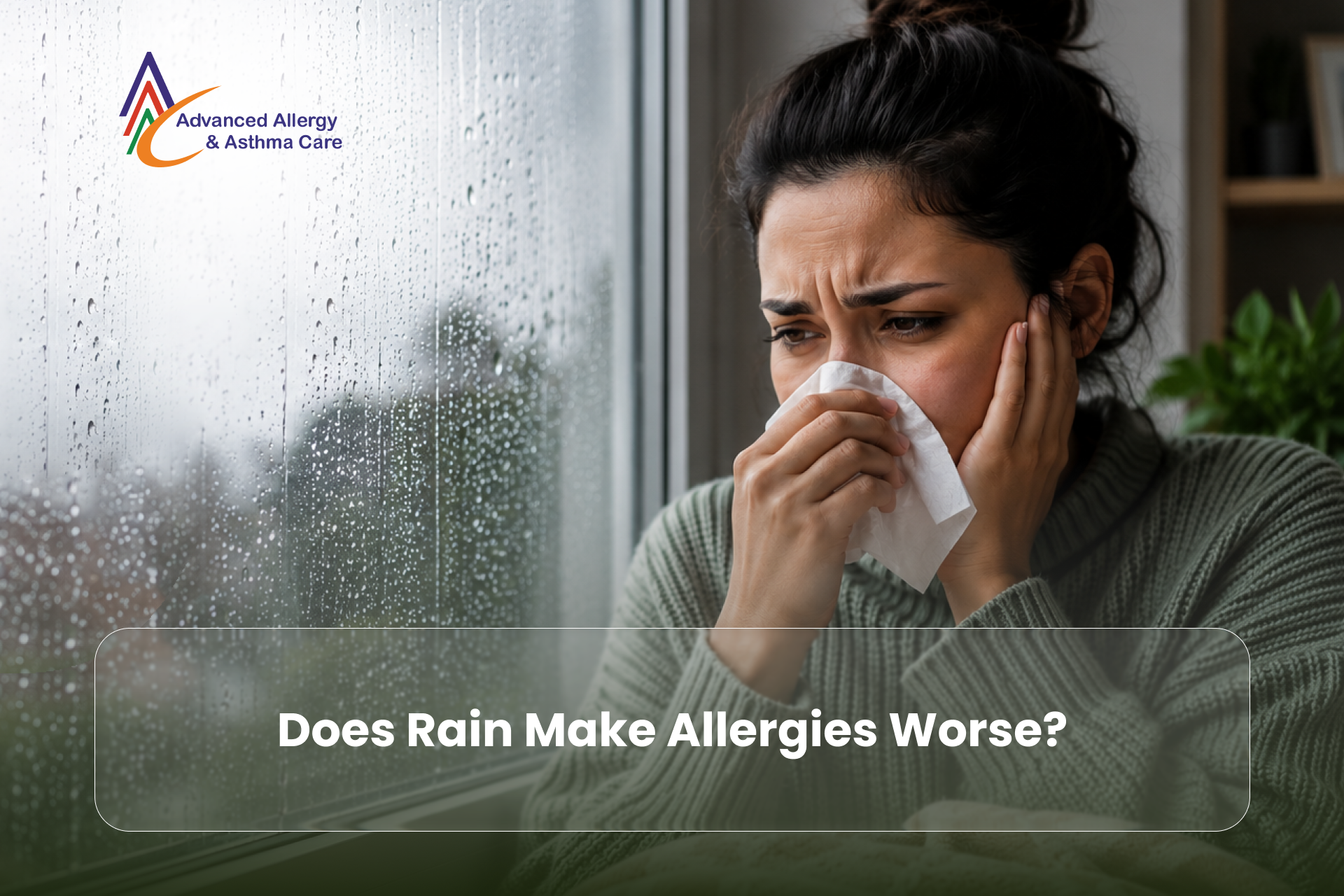
Summer also brings higher humidity, which accelerates mold growth. Mold spores can be just as potent a trigger as pollen, and they tend to peak after rainstorms or in areas with standing water. Allergy symptoms during the summer months can include nasal congestion, skin irritation, and worsening eczema in patients with atopic sensitivities. The combination of heat, humidity, and high outdoor pollen counts makes July and August particularly rough for many allergy sufferers.
Fall Allergies & Symptoms in Florida
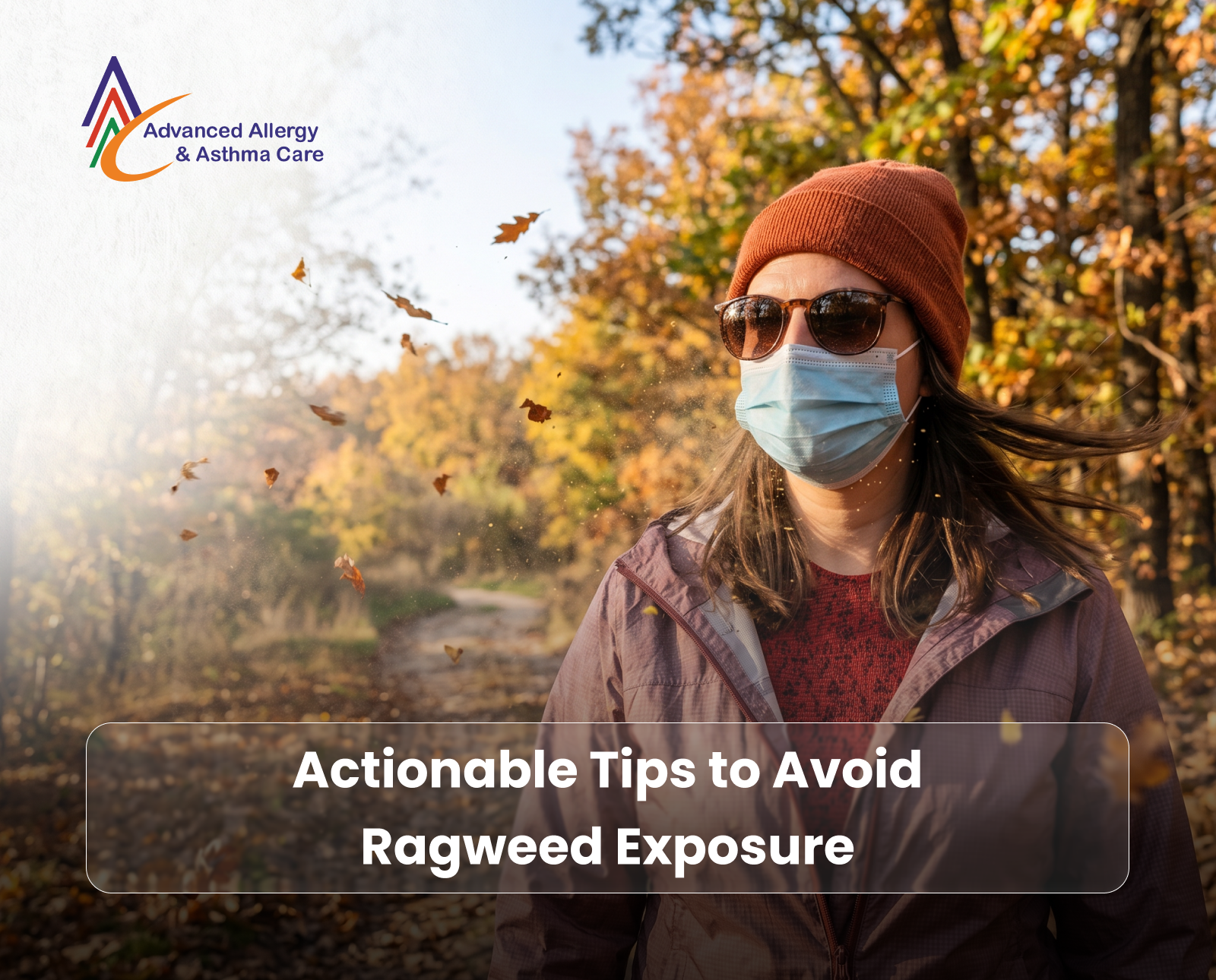
Ragweed is the headline allergen for fall, and it doesn't need to be growing anywhere near you to cause problems. Its pollen is light enough to travel hundreds of miles on the wind. For people who react to spring plant pollen, there's a meaningful chance they'll also react to ragweed, since the proteins can be similar enough to trigger a cross-reaction.
Fall is also when indoor allergens start to matter more, because people tend to spend more time indoors with windows closed. Dust mites, pet dander, and mold can all contribute to seasonal allergy symptoms that feel more like a chronic stuffy nose than a classic pollen reaction. If your symptoms seem to worsen indoors, those are likely the culprits worth investigating.
Winter Allergies & Symptoms in Florida
Florida winters are mild enough that outdoor allergens never fully disappear. Some grasses can still release pollen on warm days in December and January, and mold remains active in humid conditions. But for most people, winter is when indoor allergens take over completely: dust mites in bedding and upholstery, pet dander, and poorly ventilated spaces that concentrate whatever's floating in the air.
Seasonal allergy symptoms in winter can be subtle but persistent. Waking up with congestion, a scratchy throat, or puffy eyes on a daily basis is worth paying attention to. If symptoms improve when you leave the house and return when you're home for a while, you're likely reacting to something inside rather than out.
Tips to Survive the Allergy Season in Florida
Managing symptoms well is partly about smart avoidance and partly about the right treatment approach. Here are some practical measures that genuinely make a difference.
Watch the pollen forecast
On high-count days, limit time outdoors in the morning, when pollen levels are typically at their peak. If you've been outside for extended periods, showering and changing clothes when you get home removes pollen you've collected on your hair, skin, and clothing.
Keep windows closed
During peak pollen weeks, air conditioning is your friend. Open windows let pollen flow freely into the spaces you spend the most time in.
Invest in a HEPA air purifier
Running one in your bedroom can significantly reduce airborne allergens overnight, which matters a lot since sleep quality takes a real hit when you're congested.
Manage indoor triggers
Wash bedding weekly in hot water to reduce dust mites. Keep pets off furniture and out of the bedroom if pet dander is a known trigger. Check areas prone to moisture, like under sinks and around bathroom vents, for mold growth.
Use medications consistently
Second-generation antihistamines (cetirizine, loratadine, fexofenadine) and nasal corticosteroid sprays tend to work best when taken regularly rather than as occasional rescue measures. For a detailed look at pollen-specific treatment options in Tampa Bay, see our post on pollen allergy symptoms and treatment.
How to Get Rid of Allergies
Here's the honest answer: there's no magic switch that makes allergies disappear permanently. But there is a meaningful difference between suppressing symptoms with medication and actually retraining your immune system. The answer to ‘How to get rid of allergies’ in a lasting sense almost always points toward immunotherapy.
Allergy immunotherapy involves gradual, controlled exposure to the allergens driving your reactions until your immune system learns to stop overreacting to them. Traditional allergy shots are the most established form, typically administered over three to five years with regular in-office visits. For eligible patients, sublingual options such as drops or dissolvable tablets offer an alternative that can be used at home after an initial supervised dose.
Most patients experience a substantial reduction in symptoms over the course of treatment, and many maintain that improvement even after the protocol is complete. For patients wondering about how to get rid of allergies fast, immunotherapy isn't an overnight fix, but it's the closest thing to a durable solution because it addresses the root immune response rather than just masking its effects.
The necessary first step is knowing what you're actually allergic to.
Allergy skin testing identifies your specific triggers precisely, which makes every subsequent decision, whether that's avoidance, medication, or immunotherapy, far more targeted and effective.
Find the Best Allergist in Florida at Advanced Allergy & Asthma Care
At Advanced Allergy and Asthma Care, we've been helping Tampa Bay families get real answers since 1999. Our board-certified allergists and advanced practice providers work with each patient to identify specific triggers and build treatment plans that actually fit their lives, whether that's a busy parent who can't afford to feel run-down every spring, or someone who's tried medication after medication without finding lasting relief.
We see patients at five convenient locations across the region: New Port Richey, South Tampa, Pinellas Park, Dunedin, and Westchase. No matter where you are in the Tampa Bay area, there's a location close to you. There's no reason to spend another season pushing through symptoms that are genuinely treatable.
Stop Guessing, Start Treating
Frequently Asked Questions
Why are my allergies so bad right now?
Several factors can amplify your symptoms at any given time: higher-than-usual pollen counts on warm, breezy days; overlap between two or more active pollen seasons; or exposure to a trigger you haven't reacted to in the past. If symptoms feel more intense than in previous years, it's worth getting tested rather than guessing.
Is it allergy season right now in Florida?
In Florida, some form of allergy season is active almost year-round. Tree pollen peaks from late winter through spring, grass pollen dominates summer, ragweed arrives in late summer and fall, and indoor allergens like dust mites and mold stay relevant year-round. If your symptoms are flaring, something is almost certainly in the air or in your environment.
What are the worst months for allergies in Florida?
Most allergists would point to February through October as the most challenging stretch for most patients, with spring particularly intense for tree pollen and late summer through fall for ragweed. That said, individual experience varies based on which allergens a person is sensitized to.
How long do seasonal allergies last?
That depends on what you're reacting to. Single-season pollen allergies may cause symptoms for four to eight weeks. If you're sensitive to multiple pollen types or have indoor triggers, symptoms can persist for most of the year. Working with an allergist to identify your specific triggers gives you a much clearer picture of your personal pattern.
How do I get rid of allergies for good?
The most effective long-term option is allergy immunotherapy, which gradually desensitizes the immune system to specific triggers. Most patients experience significant symptom reduction over the course of treatment, and many maintain that improvement even after completing the protocol. Identifying your specific triggers through allergy testing is the essential first step.