Does Rain Make Allergies Worse? The Connection Between Rain, Pollen, and Mold
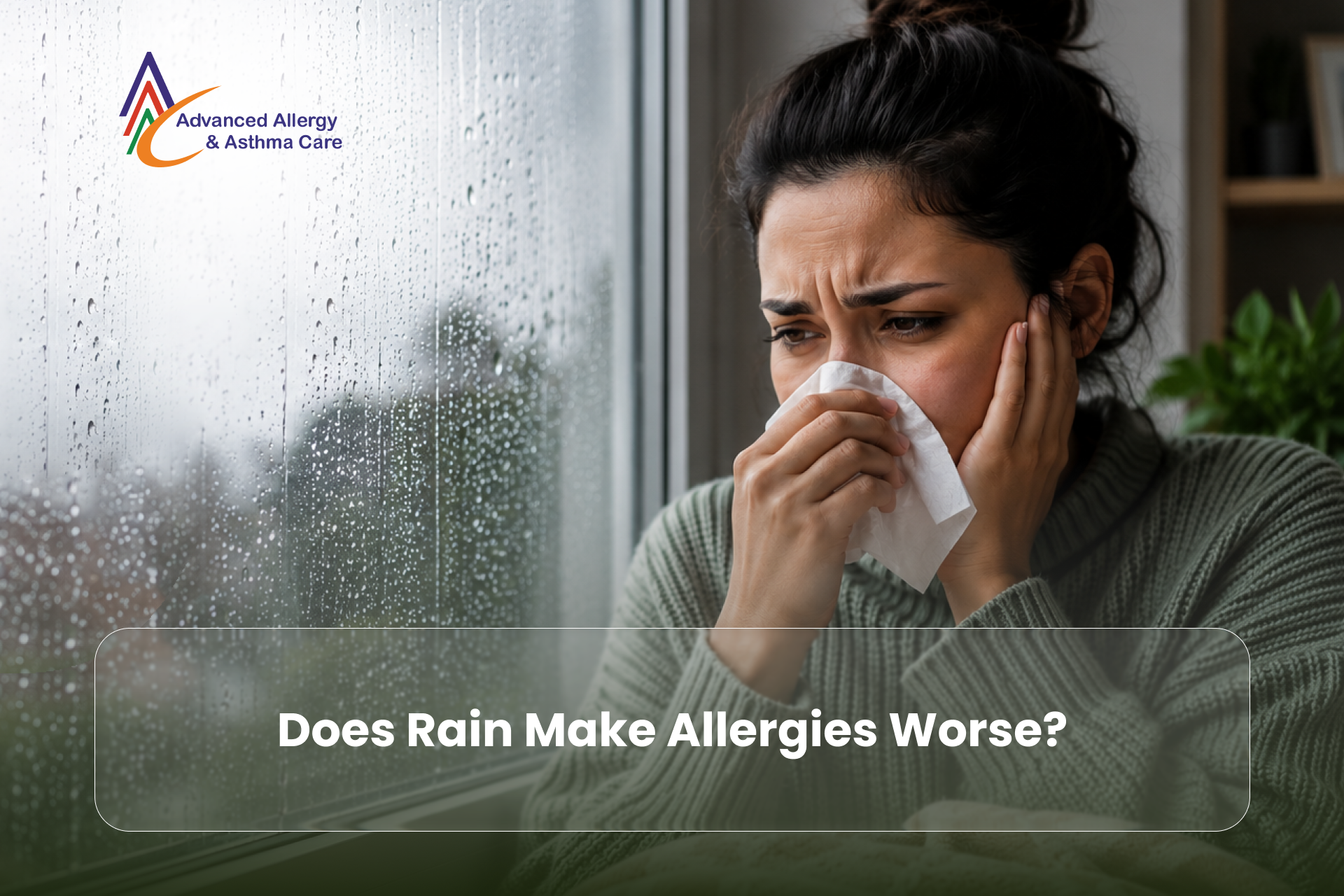
You step outside after a summer rainstorm expecting fresh air and relief from your allergies. Instead, your nose starts to itch, your eyes water, and you reach for tissues. So does rain make allergies worse? For many, the answer is a frustrating yes.
While rain can temporarily clear pollen from the air, it often sets the stage for a rebound in symptoms. The relationship between rain pollen and mold is more complicated than it seems, and understanding it can help you manage your allergies more effectively.
Protect yourself from rain triggers
Does Rain Help or Worsen Allergy Symptoms?
The answer to this question depends largely on the type of rain and what specifically triggers your immune system. In some cases, a steady, light drizzle can indeed help by weighing down pollen particles and washing them out of the air. This usually provides temporary relief for those with a pollen allergy.
On the other hand,
heavy storms and thunderstorms often have the opposite effect. Instead of clearing the air, turbulent weather can break apart pollen grains and stir up other irritants. If you find your ‘allergies worse when it rains’, it is likely because the moisture and wind are working together to create a more difficult environment for your respiratory system.
How Rain Affects Pollen Levels and Allergies When It Rains
During light rain, pollen grains may be washed from the air, providing short-term relief. However, this effect is often short-lived. Raindrops can rupture pollen grains, releasing smaller, more inhalable particles, called sub-pollen. These microscopic fragments linger in the air long after the rain stops, making them easier to breathe in.
Different types of
pollen (tree, grass, or weed) react uniquely to rain, so your symptoms may vary depending on your specific triggers.
The Pollen Burst Effect: Why Allergies Are Worse After Rain or Thunderstorm
There is a well-documented scientific phenomenon that explains why you feel absolutely miserable after a storm. It is known as the pollen burst effect, or thunderstorm asthma. When certain pollen grains get thoroughly wet, they swell up and rupture. A pollen grain can rupture into numerous tiny allergenic particles.
These fragments are then dispersed by the wind and can linger
in the air for hours. This means your allergies after rain can be far more intense than they were before the storm began. If you constantly wonder, “Can rain make allergies worse?”, this explosive reaction is usually the main culprit.
How Wet Weather Encourages Mold Growth
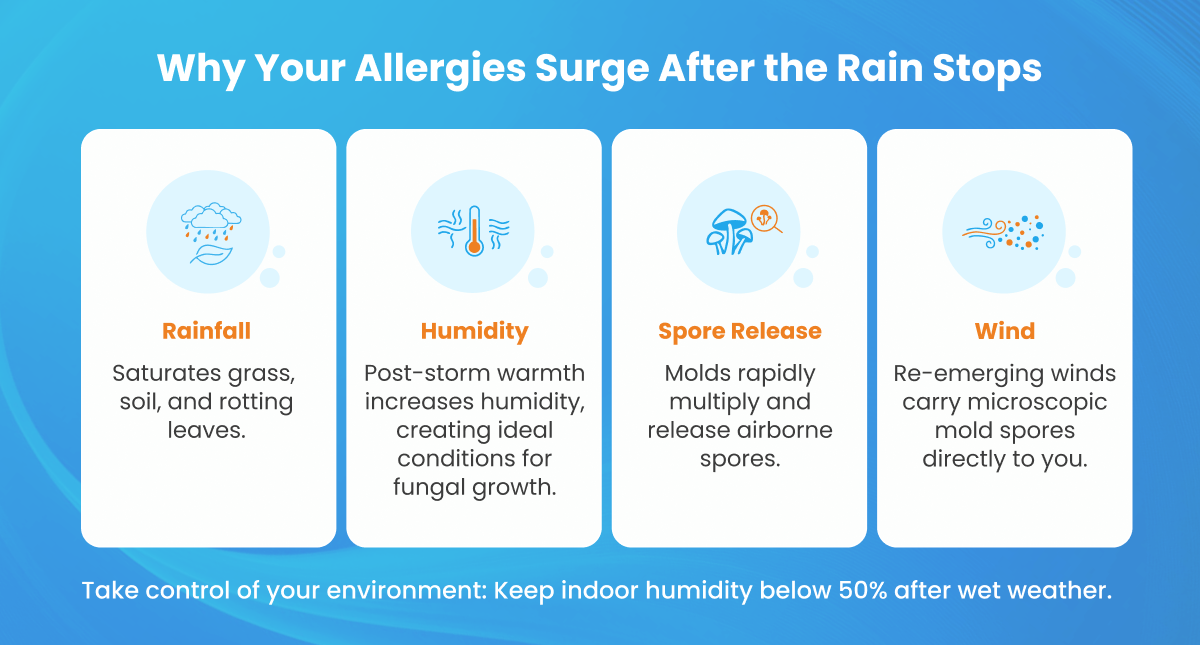
Rain does not just affect pollen. Wet weather creates ideal conditions for mold spores to thrive. Mold can grow indoors and outdoors, and damp environments after rain can lead to a surge in airborne mold spores. For those with mold-growth sensitivities, this means symptoms such as coughing, wheezing, or nasal congestion can persist or worsen long after the rain stops. Mold spores are especially problematic in areas with poor drainage or high humidity.
To understand your risk, check out our
Mold Allergy resource.
Allergies in Dry Season vs Rainy Season: What is the Difference?
In regions like Florida, the transition between the dry season and rainy season brings a shift in the types of allergens we face. During the dry season, wind is the primary vehicle for pollen, and dust is more prevalent. However, the rainy season introduces consistent humidity that keeps mold counts high and causes frequent pollen ruptures.
While the dry season might feel more "dusty," the rainy season often feels more "heavy" for allergy sufferers. The constant cycle of rain followed by heat and humidity creates favorable conditions for mold growth and allergen persistence. You can learn more about how Florida weather impacts specific triggers in our guide to
grass pollen allergy.
Common Rain Allergy Symptoms That May Worsen After Rain
Identifying your specific rain allergy symptoms is the first step toward finding relief. While they often mimic standard hay fever, they can be more intense after a storm. Look out for:
- Increased sneezing and nasal congestion.
- Itchy, watery, or red eyes.
- A scratchy throat or persistent cough.
- Shortness of breath or wheezing, especially if you have asthma.
- Fatigue caused by the body’s immune response.
If you notice these symptoms consistently correlate with the weather, it is a strong sign that you are experiencing a rain allergy flare-up.
For a more detailed list of symptoms, visit our
Allergy Symptoms resource.
Tips for Managing Rain and Allergies During Wet Weather
Protecting yourself during a stormy week takes a little preparation. These practical rainy weather safety tips can help keep your respiratory system clear:
- Stay indoors during heavy thunderstorms. Keep your windows completely closed to block out ruptured pollen fragments and flying mold spores.
- Run your air conditioning. Using a high-quality HEPA filter will trap microscopic allergens before they circulate through your living space.
- Wash your hair and change clothes. After returning from the outdoors, rinse off any invisible mold spores or pollen you might have picked up to keep them out of your bed.
- Monitor humidity levels. Use a dehumidifier to keep indoor moisture below 50 percent, which actively discourages fungal growth inside your home.
When to Seek Treatment: Can Rain Make Allergies Worse for You?
If your symptoms are severe, persistent, or interfering with your daily life, it is time to see an allergist. Rain can make allergies worse for some people, and if you are struggling to find relief, professional help can make a difference. Allergy testing can identify your specific triggers, and treatments like allergy shots or immunotherapy can provide long-term relief.
Do not let the rain keep you indoors. Take control of your allergies.
Find Relief at Advanced Allergy and Asthma Care
At Advanced Allergy and Asthma Care, we understand how frustrating it can be to manage allergies, especially when weather changes seem to make things worse. Our team of board-certified allergists is here to help you identify your triggers and develop a personalized treatment plan. Whether you are dealing with pollen, mold, or other allergens, we offer comprehensive testing and innovative treatments to help you breathe easier. Visit us to get started on your journey to relief.
Conclusion
So, does rain make allergies worse? For many, the answer is a resounding yes. Between the rupture of pollen grains and the surge in mold spores, wet weather is a common trigger for respiratory issues. By staying informed and seeking expert care, you can enjoy the cooling rain without the unwanted side effects.
Stop Guessing, Start Treating
Frequently Asked Questions
Does rain make allergies worse?
Yes, rain can make allergies worse for some people. While it may temporarily reduce airborne pollen, it can also cause pollen grains to burst, releasing smaller particles that are easier to inhale. Additionally, wet weather encourages mold growth which can trigger allergy symptoms.
Why are my allergies worse after it rains?
Your allergies may be worse after it rains due to the pollen burst effect. Rain can cause pollen grains to rupture, releasing smaller particles into the air. These particles are more likely to reach your lungs, leading to stronger allergic reactions. Increased mold spores after rain can also contribute to worse symptoms.
Does rain wash away pollen?
Rain can wash away some pollen, but the effect is often temporary. Heavy rain can also rupture pollen grains, releasing smaller, more potent particles into the air. This means that while rain may clear some pollen, it can also make the remaining pollen more problematic.
s mold worse after rain?
Yes, mold can be worse after rain. Wet weather creates ideal conditions for mold growth both indoors and outdoors. Damp environments after rain can lead to a surge in mold spores, which can trigger allergy symptoms.
Are allergies worse in the rainy season or the dry season?
It depends on your specific allergies. Dry seasons often have higher airborne pollen counts, while rainy seasons can increase mold growth. Dry air can also irritate your nasal passages, making you more sensitive to allergens. Both seasons can present challenges, but understanding your triggers can help you manage your symptoms effectively.