
Thunderstorm Asthma: What Allergy and Asthma Patients Need to Know

If you live in Florida, you know how it is: clear skies in the morning but towering thunderheads by early afternoon, followed by torrential rain and wind by 3 p.m. Florida skies change color every hour. The state has been prone to thunderstorms, thanks to its heat and coastal geography. Florida leads the nation in the number of thunderstorm days, averaging over 70 thunderstorm days per year.
For most people, the weather is an inconvenience at best, but for people with asthma or pollen allergies, Florida's daily storm cycle can trigger a potentially serious phenomenon: thunderstorm asthma.
Understanding the symptoms of thunderstorm asthma and when it can affect susceptible individuals is a crucial first step in preventing it. This guide aims to provide a better understanding of what triggers thunderstorm asthma, how to prevent it, and how to treat it.
At Advanced Allergy and Asthma Care, patients receive comprehensive treatment for respiratory conditions to ease their lives. Schedule an appointment today for the safety of you and your family.
What Is Thunderstorm Asthma?
Thunderstorm asthma is a sudden surge in asthma symptoms that happens during or immediately after a thunderstorm. Atypically, it's not caused by the rain itself. It happens because thunderstorms stir up pollen and mold spores in the air. So the ultimate allergens are mold spores and pollen, the usual suspects.
Thunderstorm Asthma can occur in anyone suffering from asthma, which automatically puts about 8% of the U.S. population at risk. But it most often affects people with seasonal allergies and hay fever (allergic rhinitis).
You can also get an attack of thunderstorm asthma if you have undiagnosed asthma or a severe case of undiagnosed or untreated seasonal allergies.
What Causes Thunderstorm Asthma?
The cause of thunderstorm asthma is slightly complex, although the short answer to ‘what causes thunderstorm asthma?’ remains pollen and mold spores.
Grass, tree, and weed pollen grains are normally too large to penetrate deeply into the lungs. They get trapped in the nose and throat. So, normal pollen exposure causes sneezing, congestion, and itchy eyes.
But thunderstorms change things. Winds lift pollen and mold spores into the storm cloud, where pollen grains absorb moisture in the high humidity.
Each pollen grain then bursts to release hundreds of microscopic fragments, some of which are small enough to travel straight into the lungs.
Powerful winds blow them across a wide area as the storm arrives, meaning many people inhale these fine pollen allergens in a very short window.
How Do Thunderstorms Trigger Asthma?
For someone with seasonal allergies or asthma, this combination can trigger an immediate and sometimes severe asthma flare.
As previously mentioned, sometimes these allergens can trigger an asthmatic attack in a patient with allergic rhinitis or in someone who has never been diagnosed at all. Advanced Allergy and Asthma Care offers treatment for
hay fever (allergic rhinitis), asthma, and seasonal allergies.
What Are the Symptoms of Thunderstorm Asthma?
Recognizing the symptoms early can really help the patient or those around them prevent or manage an impending attack. The symptoms of a thunderstorm asthma look like an asthma attack, but they arrive faster and can be more intense.
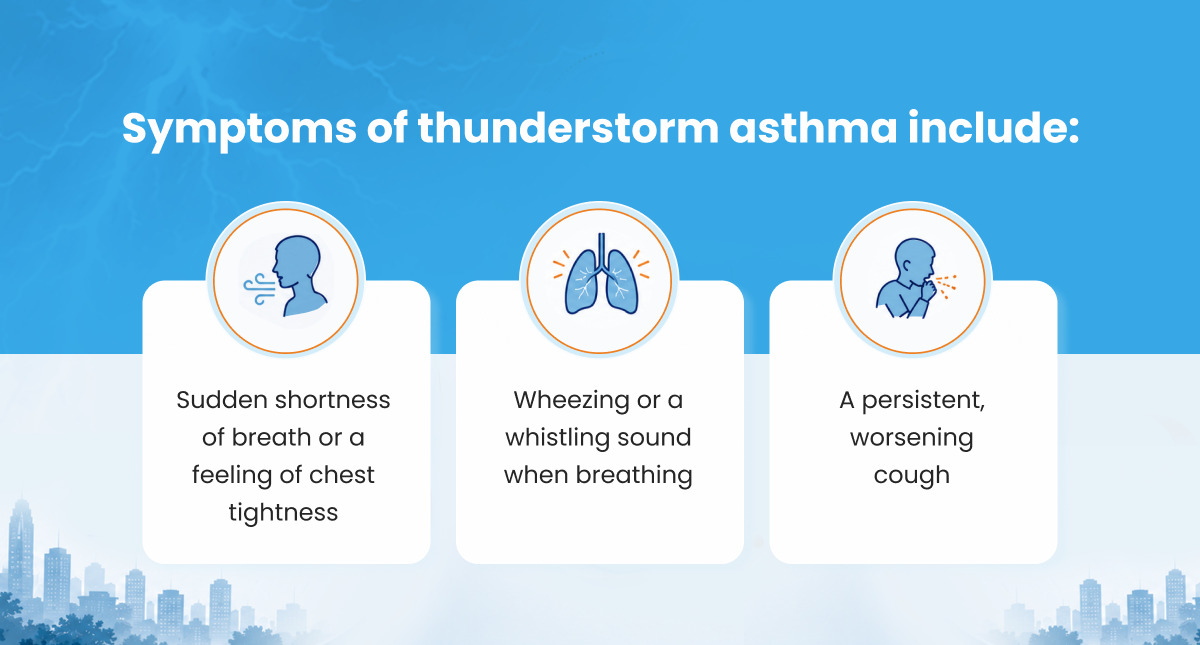
The key warning sign here is speed. Rather than building over hours, as a typical pollen-driven allergy flare might, thunderstorm asthma symptoms can escalate within 20 to 30 minutes of a storm's arrival.
Several people in the same place can develop symptoms at the same time because the cause spreads through the air.
In 2016, Australia experienced severe thunderstorm activity. This led to asthma attacks in thousands of people who had never experienced any symptoms before, and doctors found out about the thunderstorm asthma phenomenon as a result.
How Is Thunderstorm Asthma Diagnosed and Treated?
The treatment plan for thunderstorm Asthma is the same as for a normal asthma attack. The patient can use their rescue inhaler, which will clear the nasal passages and ease breathing. You can check out our
detailed take on Asthma.
How Long Does Thunderstorm Asthma Last?
Symptoms should subside in 15-20 minutes after using the inhaler. If the attacks still persist, repeat the medication.
If there is no change in the patient’s condition, call 911 immediately or take them to an emergency room.
If you are severely susceptible to severe and frequent asthmatic attacks, it might be time for you to seek long-term treatment.
Can Thunderstorm Asthma Be Prevented?
You cannot prevent a thunderstorm, but you definitely can prevent an asthma attack. Building habits that do not stress your airways during a thunderstorm can help you avoid or minimize fits.
1. Monitor the weather forecasts
Keep an eye out for weather that can worsen your conditions, such as hurricanes, rain, and thunderstorms. Take the necessary precautions before the thunderstorm approaches.
2. Keep an eye on the pollen count
High pollen levels in the air can trigger respiratory allergies. Monitor pollen levels and step out only if they are low.
3. Check your medication
Make sure you have enough valid asthma medication handy.
4. Update your Asthma action plan
Check your Asthma action plan and share it with those near you for safety.
5. Get to a shelter if caught outside.
Staying in a shelter can help you when you’re stuck outside during a storm.
6. Wear a mask
Wearing a mask even indoors during thunderstorms for added safety is advisable.
7. Avoid physical strain
Until the storm subsides, avoid strenuous physical activity that could strain your nasal passages.
How Can AAAC Help Manage Thunderstorm Asthma?
Severe and frequent asthma attacks can be exhausting for the patient, as well as the caregivers. Thankfully, long-term relief is now available at Advanced Allergy and Asthma Care.
If you have severe asthma that does not subside with the usual treatments, you must consider long-term treatments like biologics.
You only qualify for
biologics if:
- Your asthma remains uncontrolled despite regular use of inhalers or steroids.
- You experience frequent flare-ups that send you to urgent care or the ER.
- Tests show a high eosinophil count.
- Your asthma is strongly allergy-driven, with symptoms triggered by allergens year-round.
Frequently Asked Questions
How is thunderstorm asthma diagnosed?
Self-diagnosing thunderstorm asthma or any other condition is not advised. You should consult Apex Allergy and Asthma to obtain an accurate diagnosis.
How long does thunderstorm asthma last?
An acute thunderstorm asthma attack typically begins 20 to 30 minutes after a storm starts and lasts for a few hours.
I suffer from seasonal allergies. Can I have a thunderstorm asthma attack?
There is a chance you might suffer an attack under extreme conditions. However, it is best to consult Advanced Allergy and Asthma for a clear diagnosis.