
Acing Ragweed Allergy Management: Understand It to Treat It
Fall brings orange foliage and cool weather, the season of pumpkin spice lattes and cozy sweaters. But for some people, it also brings sneezing, itchy eyes, and a runny nose.
You wouldn’t be surprised to know that this annual sneezing fit of yours is sponsored by ragweed pollen.
About
25 million people in the USA are affected by hay fever, caused by ragweed pollen. If you are one of those people, reach out to us at Advanced Allergy and Asthma Care. We have provided compassionate care to families since 1999, and we welcome the opportunity to support yours.
What Is a Ragweed Allergy?
Ragweed is a common weed that grows almost everywhere in the USA, especially along roadsides, in fields, and in vacant lots. They are more abundant in the
Eastern and Midwestern states. This seemingly unassuming plant is one of the biggest allergy troublemakers in the country.
Causes of a Ragweed Allergy
A ragweed allergy isn't caused by the plant itself, but by your body's overzealous defense system reacting to ragweed pollen. A single ragweed plant can release up to a billion grains of pollen over one season, and that pollen is light enough to travel for miles on the wind.
When someone who is prone to ragweed allergy inhales that pollen, their immune system mistakes it for a threat and releases chemicals to "fight it off." That immune overreaction is what causes all the allergy symptoms.
For a detailed understanding, check out this blog on
seasonal allergies,
Common Ragweed Allergy Symptoms
Ragweed allergy symptoms closely mirror those of hay fever. You might notice:
- Sneezing, often in fits
- A runny nose
- Itchy, watery, or red eyes
- Itchy throat or ears
- Rashes
For people who have asthma, ragweed allergy can
trigger asthma attacks or worsen the symptoms. Get yourself treated for
asthma as soon as possible to relieve symptoms.
Ragweed pollen can also trigger Oral Allergy Syndrome (OAS), in which certain fresh fruits and vegetables, like bananas, melons, or zucchini, cause itching or tingling in the mouth. It's a strange but well-documented connection.
It happens because the immune system confuses certain foods for ragweed pollen and triggers the same allergy symptoms.
When Is It Ragweed Allergy Season?
Most people consider spring to be the peak allergy season, but they forget about the ragweed allergy season.
Ragweed pollen season typically kicks off in mid-to-late August and can run through October or even November, depending on when the first hard frost hits. It usually lasts 6-10 weeks, give or take, and pollen counts are typically highest in mid-September.
If you notice your allergies flaring up right as summer winds down, it is probably because pollen counts are usually highest
- In the morning hours, when ragweed releases the most pollen
- On warm, dry, windy days
- Right before a frost, when plants often release one last pollen surge
How Long Do Ragweed Allergies Last?
Any allergy symptoms usually last as long as the allergen is present. Ragweed allergy symptoms also generally stick around for the length of the season itself. So, anywhere from six to twelve weeks, depending on your climate. In warmer regions, ragweed pollen can linger even longer. So, it is important to consult an allergist for a peaceful fall.
The arrival of a hard frost kills off ragweed plants, and pollen production drops sharply. Until then, ragweed allergy symptoms rise and fall with local pollen counts.
Tips to Manage Ragweed Allergies
If you have any allergies, the first thing you should do is consult Advanced Allergy and Asthma for proper guidance. You can also check out this article on ‘Pollen Allergy Treatment’.
But apart from medication, a few small habit changes can make a surprisingly big difference:
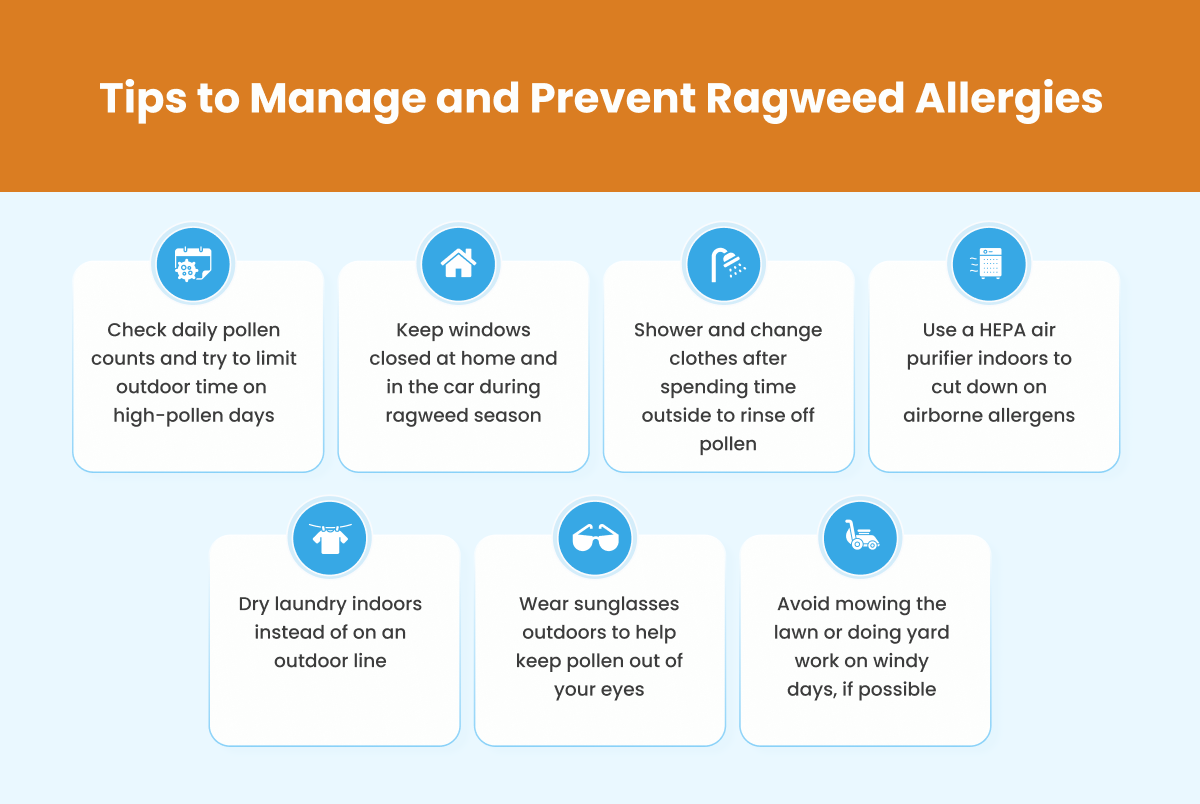
None of these tips will eliminate ragweed pollen entirely, but it is always better to be safe than sorry. Together, they can meaningfully reduce your ragweed pollen exposure and, therefore, your misery of the season.
When to See a Doctor
It's time to see a specialist if:
- Your symptoms aren't improving with treatment
- Allergies are affecting your sleep, work, or daily life
- You're experiencing new or worsening asthma symptoms
- You want a long-term solution rather than repeated seasonal treatment
Advanced Allergy and Asthma Care can really help. Our team specializes in identifying your symptoms and building a treatment plan tailored to you. We're proud to provide care across five locations, making it easier to get expert help close to home. Find an allergist in a location convenient to you.
- New Port Richey
- South Tampa
- Pinellas Park
- Dunedin
- Westchase
Best Treatments and Medicine for Ragweed Allergies
Some of the
basic treatments for mild symptoms are over-the-counter medicines like
- Antihistamines for ragweed allergy, to reduce sneezing, itching, and runny nose
- Nasal sprays to calm inflammation
- Decongestants for short-term stuffy-nose relief
- Antihistamine eye drops for itchy, watery eyes
It is almost always a good idea to consider immunotherapy(allergy shots). Immunotherapy, which gradually trains your immune system to tolerate ragweed pollen. Sublingual immunotherapy tablets are a needle-free alternative that works well as well.
Everyone's body responds a little differently, so what works wonders for a friend might not do much for you. The best idea is always to consult Advanced Allergy and Asthma Care specialists for the best allergy care.
Frequently Asked Questions
Can ragweed allergies develop later in life?
Yes. It's completely possible to develop a ragweed allergy as an adult, even if you never had seasonal allergies as a kid. Allergies change and evolve with age.
Does rain help or worsen ragweed allergies?
Light rain can actually help by washing pollen out of the air. However, thunderstorms can sometimes make things worse by breaking pollen grains into smaller particles that travel deeper into the lungs. These are called thunderstorm allergies.
Can I be allergic to ragweed and not know it?
Absolutely. Many people assume they have a lingering cold or seasonal sinus issue when it's actually a ragweed allergy. An allergy test can confirm what's really going on. Visit our doctors today.
Is there a permanent cure for ragweed allergies?
There's no outright "cure," but immunotherapy can significantly reduce sensitivity over time, sometimes long after treatment ends.