Asthma & Allergies During Halloween: How to Avoid Decoration and Fall Allergy Triggers in Florida
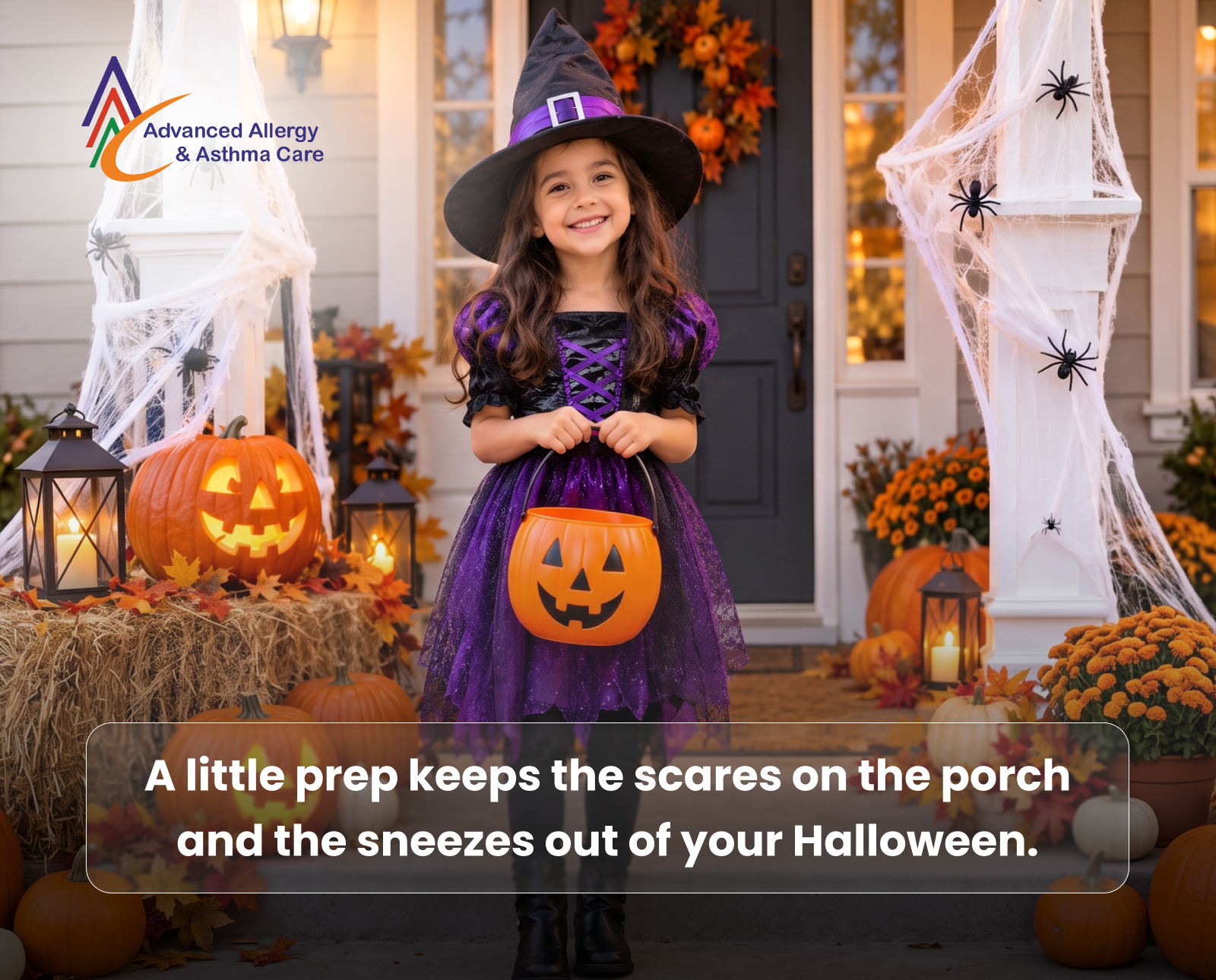
Halloween is the one night a year when scary things are fun. Skeletons? Cute. Cobwebs? Festive. A sneezing fit that makes your mask fly off in front of the whole neighborhood? Not the scary we’re aiming for.
If you or your kids have asthma or allergies, spooky season can feel like it has a few extra tricks up its sleeve. The good news is that you don't have to cancel Halloween. You just need a game plan to survive allergies during Halloween.
How Halloween Can Trigger Asthma and Allergies
Halloween is an event packed with allergy triggers your airways may not love. Dusty boxes containing Halloween decorations come out of the attic. Fake fog fills the porch, and people hand out buckets full of candy. All of these point towards plenty of allergens.
For people with asthma, irritants like dust, smoke, strong odors, and mold from Halloween prep can constrict airways and trigger coughing, wheezing, or chest tightness. For people with allergies, the same culprits can bring on sneezing, itchy eyes, a runny nose, or skin reactions. If you have both, you’re in a fix.
But that is still no reason to cancel Halloween just yet. It just means a little planning before Halloween to play it safe goes a long way. Read this blog for
Tampa, Florida's fall forecast.
Common Decoration Triggers for Asthma and Allergies during Halloween
Some of your favorite spooky stuff might be quietly causing trouble. Here are the usual suspects:
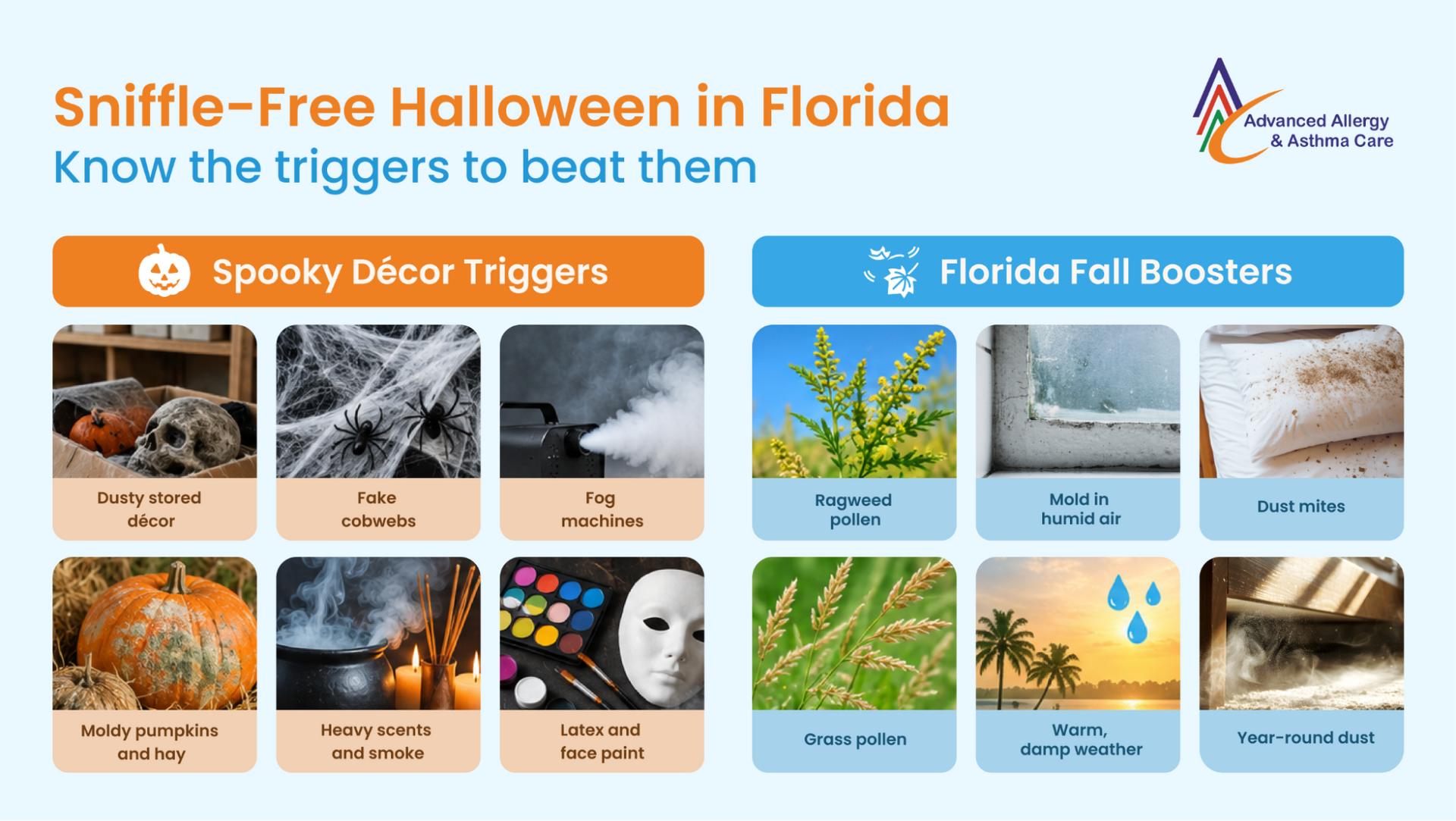
- Dusty decorations from storage.
That box of Halloween goodies has been sitting in a hot garage or attic for 11 months. It's basically a dust-mite and mold party, and your nose wasn't invited. - Fake cobwebs.
They look great, but the fluffy, stretchy stuff catches dust like it's getting paid to. Hang them up, and you're essentially hanging up a dust magnet. - Fog machines.
Spooky on the porch, even spookier on the lungs. The fog can irritate sensitive airways, especially for people with asthma. - Real pumpkins and hay bales.
Cute, yes. But pumpkins left outside in Florida's heat and humidity can develop mold quickly, and hay and straw can stir up mold and pollen. - Artificial pumpkins and plastic décor.
If they've been stored in damp conditions, they may have picked up mold. Give them a good once-over before displaying them. - Odorants.
Strong fragrances can irritate sensitive airways. Scented candles and air fresheners almost guarantee a sneezing fit. - Costumes, wigs, and face paint.
Old costumes can be dusty; some fabrics and wigs can be irritating, and face paint or makeup can cause skin reactions, all of which can contribute to allergies during Halloween. Latex masks and props can be a problem for anyone with a latex allergy, which is why ACAAI suggests careful examination before renting. The easiest way to determine whether you have a skin allergy is to get skin testing. Call us now,
Many treats contain common food allergens like peanuts, tree nuts, milk, eggs, wheat, and soy. If food allergies are part of your family's life, read those labels, even on the fun-size stuff.
Read more about
seasonal allergies in Florida and how to manage them over here.
Why Fall Allergy Triggers During Halloween Symptoms Worse in Florida
In Florida, fall brings warm weather, humidity, and the occasional surprise rainstorm. Which is great for beach plans, but not always great for your sinuses. Use this
Florida allergy survival guide
to manage allergies better.
Fall is a big season for allergens, and Florida's climate keeps many of them going strong, which is why Halloween allergies spike.
- Ragweed and other weed pollen tend to peak in the fall.
- Mold loves warm, damp conditions, and Florida has plenty of both. So, mold allergies in Fall are common.
- Dust mites thrive in humidity.
- Grass pollen can linger much of the year in warm climates.
Your body may already be dealing with a busy season of triggers, so adding dusty décor and mold-prone pumpkins to the list can quickly intensify symptoms.
How to Avoid Halloween and Fall Allergy Triggers
A few small tweaks in your routine can make a big difference:
- Clean your decorations before you hang them. Wipe down hard surfaces, and wash anything fabric if you can. Do it outside or in a well-ventilated spot, and consider wearing a mask.
- Store things better next year. Airtight plastic bins beat cardboard boxes every time. Bonus: future you will be very grateful.
- Choose your pumpkins wisely. If real pumpkins are non-negotiable, enjoy them briefly and toss them before they get moldy. Or switch to clean, washable fake ones or painted pumpkins you can wipe down.
- Skip the fog machine. Try lights, projections, or a creepy playlist instead. Spooky doesn't necessarily have to mean smoky.
- Skip heavy candles and air fresheners, especially in rooms where someone has asthma. Allergies during Halloween sneak up in little habits like that.
- Test costumes and face paint ahead of time. Try a small patch of skin first, and choose hypoallergenic products when possible. Choose breathable masks that are easy to remove.
- Keep your meds handy. Bring your rescue inhaler, antihistamines, or epinephrine auto-injector if you've been prescribed one. AAFA also suggests keeping an action plan ready.
- Watch the pollen and mold counts. On high-count days, think about spending less time outdoors and showering and changing clothes when you get home. Check out the ragweed pollen management guide here.
- Keep your home air in check. Run the A/C, keep windows closed on high-pollen days, and swap out filters regularly.
- Read the candy labels. Make a plan with your kids about what's safe to eat, and sort through the loot before anyone digs in to avoid food allergies during Halloween.
AAAAI
also guides you on how to avoid anaphylaxis this season.
For food and pollen allergies this Halloween,
consider patch testing for a quicker diagnosis.
Asthma and Allergy Symptoms to Watch For This Halloween
An allergy and a cold are often mistaken for each other and understandably so. So here is a list of some symptoms that point towards allergies:
- Sneezing, runny or stuffy nose
- Itchy, watery, or red eyes
- Coughing that won't quit, especially at night or after being outside
- Wheezing or whistling when you breathe
- Chest tightness or shortness of breath
- Itchy skin, rashes, or hives
- Swelling of the lips, face, or tongue
That last group, along with trouble breathing or swelling, can signal a more severe reaction that needs immediate attention. If that happens, call 911 right away.
When to See Advanced Allergy and Asthma Care?
It's easy to shrug off sniffles as "just the season," but if your symptoms keep coming back, it may be time to find answers. Consider booking a visit with us if:
- Your symptoms last more than a couple of weeks or keep returning every fall
- Over-the-counter medicines aren't doing the job
- Asthma symptoms are waking you up at night or interfering with daily life
- You're relying on your rescue inhaler more than usual
- You've had a reaction to food, latex, or something else and aren't sure why
- You'd just like to know what you're actually allergic to, instead of guessing
Advanced Allergy and Asthma Care can pinpoint your triggers through testing and build a plan that fits your lifestyle, so you can enjoy the season instead of battling allergies during Halloween.
Enjoy a Safer Halloween with Advanced Allergy and Asthma Care
You shouldn't have to sit out the fun because of allergies or asthma. The team at AAAC is here to help Florida families identify what's triggering their symptoms and create a plan to keep them under control. Whether you're dealing with seasonal allergies, asthma flare-ups, or a mystery reaction that has you scratching your head (and your arms), we'd love to help you breathe easier this spooky season and beyond.
Halloween should be about costumes, candy, and a little harmless screaming, not sneezing, wheezing, and itchy eyes. With a bit of prep, like cleaning your décor, picking smarter decorations, packing your medications, and knowing your triggers, you can keep the scares where they belong: in the movies and on the porch.
Here's to a spooky, sweet, and sniffle-free Halloween!
If Halloween is around the corner and your symptoms are already showing up uninvited, reach out to AAAC.
Frequently Asked Questions
Can Halloween decorations really trigger asthma and allergies?
They sure can. Dust, mold, strong scents, and machine fog are common irritants, and decorations stored for months tend to accumulate plenty of them.
Are fake cobwebs bad for allergies?
They can be. The fluffy material easily traps dust, which can bother people with dust allergies or asthma. Hanging them in lower-traffic spots, or skipping them, can help.
Can real pumpkins cause allergy symptoms?
Not usually because of the pumpkin itself, but pumpkins left out in Florida's heat and humidity can grow mold quickly. Toss them before they get fuzzy, and wash your hands after handling them.
How can I tell the difference between allergies, asthma, and a cold?
Colds usually clear up within a week or two and may come with a fever or body aches. Allergies often cause itchy eyes and persistent sneezing, while asthma can cause wheezing, chest tightness, or shortness of breath. If you're not sure, an allergist can help.
Are fog machines safe for people with asthma?
They can irritate sensitive airways, so avoid them if you or someone nearby has asthma. Lighting and sound effects are a safer way to set the mood.
Can face paint cause an allergic reaction?
Yes. Some face paints and makeup can cause skin reactions. Test a small patch a day or two before Halloween, and look for hypoallergenic products.
When should I see an allergist?
If your symptoms are frequent, hard to control, or interfere with daily life, book an appointment. Seek emergency care right away for trouble breathing, swelling of the face or throat, or a severe allergic reaction.